100 Days Project, Dairy Free, Gluten Free (with Substitutions), Mains, Recipes, Uncategorized, Vegan (with substitutions)

Day 28 – Spiced Eggplant with Herbed Bulgur Salad

day28

Since the last two days have been quick and simple recipes, I figured I would do something a bit fancier for today’s post.

Are you ever in a Doctor’s office or coffee shop flipping through the magazines and come across that amazing looking recipe you want to take home to try? So you very sneakily and quietly, trying not to attract the receptionist’s or cafe staff’s attention, rip the recipe out of the magazine and quickly stuff it into whatever bag or purse you have with you. I know I have done this countless times over the years since I have started being interested in cooking as a teenager. It always leaves me feeling a bit guilty . . . but thank goodness for technology and camera phones; I no longer have this guilt. Now I simply pull my iPhone out a take a picture of whatever amazing looking recipe has caught my attention. This recipe for Spiced Eggplant with Herbed Bulgur Salad, found in January 2012 issue of Bon Appetit magazine, is was one of these recipes that I snapped with my iPhone.

Eggplants are a vegetable that is native to the Indian Subcontinent, has been cultivated in southern and eastern Asia, and the first known written record is found in an ancient Chinese agricultural treatise. It is believed that the eggplant was introduced throughout the Mediterranean by the Arabs in the early Middle Ages. The raw flesh of the eggplant can have a somewhat bitter taste, but becomes tender when cooked and develops a rich, complex flavor. Many recipes advise salting, rinsing and draining  eggplants to soften it and to reduce the amount of fat absorbed during cooking, but mainly to remove the bitterness that it can have. The flesh is capable of absorbing large amounts of cooking fats and sauces, making for very rich dishes, but salting reduces the amount of oil absorbed. Due to its texture and bulk, eggplant makes a great  meat substitute in vegan and vegetarian cuisine.

Bulgur is a whole grain, usually sold parboiled and dried, that has a light nutty flavor and is a common ingredient in Armenian, Assyrian, Lebanese, Turkish, Middle Eastern, and Mediterranean dishes.  Bulgur can be used in pilafs, soups, bakery goods, salads, or as stuffing. Its high nutritional value makes it a good substitute for rice or couscous.

I was looking forward to making this dish because of the interesting spice mixture that is brushed on the eggplants before they are roasted, and the combination of sweet, savory, and crunchy ingredients that are mixed through the bulgur salad, and this recipe definitely delivered on the promise of great flavor and spice.

This dish can easily be made dairy free and vegan by leaving off the yogurt, and the bulgur can be substituted with quinoa to make it gluten free.

Spiced Eggplant with Herbed Bulgur Salad

from: Bon Apetit, January 2012

INGREDIENTS

  • 1/2 cup olive oil, divided, plus more for drizzling
  • 2 tablespoons preserved lemon peel, finely chopped
  • 2 garlic cloves, smashed
  • 2 teaspoons ground cumin
  • 1 teaspoon ground coriander
  • 1 teaspoon paprika
  • 3/4 teaspoon ground cinnamon
  • 1/2 teaspoon crushed red pepper flakes
  • 1/2 teaspoon sea salt
  • 2 medium eggplants (9-10 ounces each), halved lengthwise
  • 1 cup quick cooking bulgur
  • 1/2 cup pitted green olives or capers
  • 1/2 small red onion, thinly sliced
  • 1/3 cup currants
  • 1/2 cup flat-leaf parsley, chopped
  • 1/3 cup fresh coriander, chopped, plus more for garnish
  • 1/4 cup pistachios, toasted and lightly crushed
  • 2 tablespoons fresh lemon juice
  • freshly ground black pepper
  • 1 cup Greek style yogurt

Preheat ovem to 350 degrees F or 180 degrees C

In a small bowl, combine 1/4 cup oil, the next seven ingredients, and 1/2 teaspoon salt.

Score the flesh of each eggplant half with 15mmor 1/2 inch deep diagonal crisscrossing lines, spacing 40mm or 1 inch apart (do not cut through the skin). Drizzle 1 tablespoon oil over each cut side, allowing it to soak in. Season lightly with salt. Brush or spoon spice mix on each half diving it equally. Place eggplants, cut side up on a rimmed baking sheet and roast until soft ( about 50 – 60 min).

While eggplant is cooking, place bulgur in a large bowl and cover with 1 1/2 cups boiling water. Let soak for 45 minutes to soften and absorb water. Stir in olives or capers, onion, currants, parsley, 1/2 cup coriander, pistachios, and lemon juice. Season to taste with salt and pepper, and then let sit for at least 30 minutes for flavors to meld.

Serve at room temperature, with a dallop of greek yogurt on top of the bulgur salad and coriander to garnish.

ENJOY!!

Standard
100 Days Project, Recipes, Side Dish, Vegan (with substitutions)

Day 27 – Crumbed Asparagus

day27

Another busy day needs another quick, simple, and yummy recipe . . .

This recipe for Crumbed Asparagus, by The Cozy Herbivore, seemed to be the perfect side dish for the left over Creamy Pearl Barley & Porcini Mushroom Risotto from my Day 25 post. It has lovely flavors of lemon, honey, garlic, and chive added into the freshness of the roast asparagus, and the crunchiness of the panko bread crumb is one of the best parts of the dish.

Asparagus has been eaten as a vegetable and used as a medicine, since ancient times.  It was known in Syria and in Spain, and Greeks and Romans ate it fresh when in season and dried it for eating during the winter.  A recipe for cooking asparagus is in the oldest surviving book of recipes, and the ancient Greek physicians used asparagus as a beneficial herb during the second century AD. By 1469, asparagus was cultivated in French monasteries, and asparagus became available to the New World around 1850.  Because once the buds start to open, the shoots will turn “woody”, only young asparagus shoots tend to be eaten.  Asparagus is low in calories, very low in sodium, and is a good source of many other vitamins and minerals.

I know winter in New Zealand is not asparagus season, so I am being a bit naughty, but this dish was worth the ridiculous amount I paid for the asparagus at the food store.

The recipe can easily be made gluten free by substitutng the bread crumbs for gluten free bread crumbs, and can be made Vegan by substituting the honey for agave nectar or brown rice syrup, and leaving out the parmesan.

Crumbed Asparagus

adapted from: The Cozy Herbivore

MAKES: 2-3 servings

INGREDIENTS

for the asparagus:

  • 1 pound fresh asparagus
  • 1 medium lemon
  • 1 teaspoon honey
  • 1 tablespoon extra-virgin olive oil
  • 1/2 teaspoon dried garlic granules
  • sea salt & freshly cracked pepper, to taste

for the crumb topping:

  • 1 cup bread crumbs
  • 1/4 cup finely shredded parmesan cheese
  • 1 tablespoon finely minced fresh flat-leafed parsley
  • 1 teaspoon finely minced fresh chives
  • 2 tablespoons extra-virgin olive oil
  • sea salt & freshly cracked pepper, to taste

Preheat oven to 400 degrees Fahrenheit.

Trim asparagus spears by snapping off woody ends. The asparagus will break naturally between the fresh stalk and the tough end. Discard the ends.

Juice and zest lemon. Finely mince lemon zest and set aside to use in crumb topping.

In a small bowl whisk together lemon juice, honey, garlic granules and olive oil.  Add a pinch of sea salt & a few cracks of pepper. Taste and adjust seasonings accordingly.

Toss trimmed asparagus spears in lemon juice mixture. Arrange coated spears in a single layer in a casserole dish, and pour remaining lemon juice mixture over.

Bake until just tender, about 10 minutes. They should feel slightly soft and be easily pierced with a fork without being mushy.

While the asparagus is roasting, prepare crumb topping. In a large bowl, combine bread crumbs, cheese, minced herbs, olive oil and 1 teaspoon of the finely minced lemon zest. Using freshly washed hands, toss the mixture together until combined. Add a generous pinch of sea salt & a few cracks of pepper. Taste
and adjust seasonings accordingly.

When asparagus is done roasting, pour bread crumb mixture over and place under the broiler of your oven for one minute, or until browned and toasty. This can very quickly turn from brown to burned so keep a careful watch and do not walk away.

When the crumb has browned, take the baking dish out of the oven and serve,

ENJOY!!

Standard
100 Days Project, Dairy Free, Raw, Recipes, Snacks, Vegan (with substitutions)

Day 26 – No Bake Granola Bars

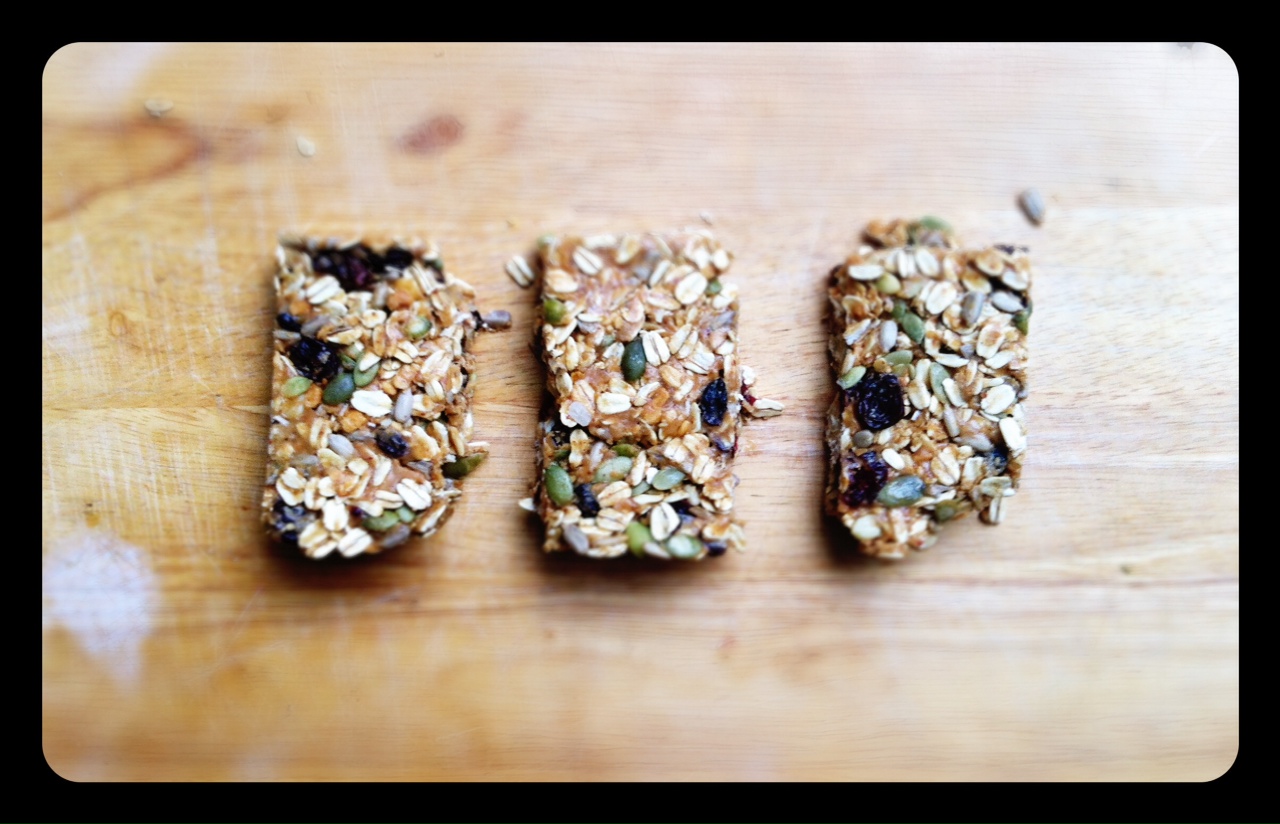
Photo1(32)

On to Day 26, Herbivores . . .

Today was a busy day, did not have time to grab breakfast, and got home late. These kind of days are where quick snacks come in handy, and quick recipes. I had seen this recipe for easy No Bake Granola Bars on Food52, and figured I would keep it around for one of these short on time days during the 100 Days Project.

All these ingredients are items I normally keep in my pantry, and I think most people will probably have around. I used rolled oats, sunflower seeds, pumpkin seeds, raisins, and dried cranberries, but there are infinite various on this combination. You can easily tailor the recipe to suit your personal tastes. Some other suggestions might be chocolate chips, dried pineapple, cashews, almonds, coconut, or dried cherries, and these granola bars could easily be made gluten free by using puffed millet and other gluten free cereals instead of oats. This recipe can also be made Vegan by substituting the honey with agave nectar or brown rice syrup. Personally I love honey though, I think honey is one of the main reasons I am not Vegan. Well . . . honey and cheese.

No Bake Granola Bars

From: Food52

MAKES:10-12

INGREDIENTS

  • 2 1/2 cups rolled or quick oats
  • 1/2 cup raw pumpkin seeds
  • 1/2 cup raw sunflower seeds
  • 1/2 cup raisins
  • 1/2 cup dried cranberries
  • 2/3 cups peanut or almond butter
  • 2/3 cup honey (adjust based on how well things stick together)
  • 1/8 teaspoon sea salt (adjust based on which nut butter you use)

Mix oats,  seeds, and fruit in a large bowl

I a small bowl, whisk together nut butter, sweetener, and sea salt. I used a half and half combination of Pics Peanut butter and Almond butter, mostly because I did not have enough peanut butter on its own, but also because I thought it would give an interesting taste.  If you are in New Zealand, where it is easier to find solid honey than liquid honey, put the solid honey in the microwave for 30 seconds to loosen it up before trying to whisk it into the peanut butter.
Pour into oat mixture, and mix well, till everything is sticky and combined. If it’s too dry, add a bit more honey.
Press mixture into a shallow baking dish that you’ve lined with foil, saran wrap, or baking paper. Cover with more foil/saran, press well into the baking dish (Iused the bottom on another baking dish for this in order to make sure the pressure was flat and even), and refrigerate for 4 hours.
Cut into bar shapes, wrap, and keep refridgerated till ready to use. They will last two weeks in the fridge.
ENJOY!!
Standard
100 Days Project, Mains, Recipes, Vegan (with substitutions)

Day 25 – Creamy Pearl Barley & Porcini Mushroom Risotto

Day25

Who Hoo . . . it is Day 25, which means I am a quarter of the way through my 100 Days Project challenge.

Do you ever forget you already have an ingredient in the pantry and buy more? I do . . . recently this has happened with pearl barley; I have more pearl barley in my cupboard than anyone person should realistically have. I figured this milestone called for something a little bit fancy, and this recipe for Creamy Pearl Barley & Porcini Mushrrom Risotto, from Treehugger (my favorite green living website), originally caught my eye when I was going through a phase of experimenting with pearl barley recipes. I never got around to making this one so it was a perfect fit for today’s recipe.

Pearl Barley is the most common form of barley used for cooking. It cooks faster and is less chewy than other, less-processed forms of barley. Similar to wheat in its caloric, protein, vitamin and mineral content, pearl barley is cooked mainly in soups and stews. In this case, using barley in a risotto gives the dish a nutty flavor not usually found with risotto rice.

Porcini Mushrooms are a prized ingredient in various foods and cuisines.  Most often dried, these mushrooms keep their flavor after drying, and are then reconstituted and used in cooking.  Low in fat and digestible carbohydrates, and high in protein, vitamins, minerals and dietary fibre, Porcini mushrooms are commonly prepared and eaten in soups, pasta, or risotto.  They are sold commercially,but are very difficult to cultivate making Porcini mushrooms an expensive ingredient, but I figured Day 25 needed to be special.

Thank you Herbivores for sticking with me so far!! I hope you are enjoying the recipes I am sharing with you and they are inspiring you to do some cooking of your own.

Creamy Pearl Barley & Porcini Mushroom Risotto

adapted from: Treehugger

INGREDIENTS

  • 14g dried porcini mushrooms
  • 2 tablespoons unsalted butter (use olive oil for a vegan version)
  • 4 good sized shallots, finely chopped
  • 1/2 teaspoon freshly ground black pepper
  • 1 cup pearl barley
  • 1/2 cup dry white wine (be sure it is vegan, if making the vegan version)
  • 4 cups mushroom or vegetable stock
  • 1/2 cup crumbled fresh soft cheese (skip for vegan version, or use a vegan substitute)
  • 1/4 cup snipped fresh oregano, chives, or other fresh herb of your choice
  • salt to taste

Combine porcini mushrooms with 1 cup hot water in a bowl and set aside for 5 minutes. Then remove mushrooms, squeezing out and reserving soaking liquid.  Rinse and drain the porcini mushrooms, then chop finely. Strain the soaking liquid through a paper towel lined sieve into a medium saucepan. Set aside.

In a large saucepan, melt butter over medium heat. Add the shallots, porcini mushrooms, and pepper. Cook for 5 to 7 minutes, stirring often, until onion is soft but not
browned. Stir in barley until well coated with onion mixture.

Add wine and bring to a boil, stirring until wine has been absorbed. Remember you need to use a wine that tastes nice, because if you use a cheap, bad tasting wine, that flavor will transfer into your dish. Stir in 2 cups stock. Increase heat to high and bring to a boil, and then reduce heat to low and simmer, uncovered and stirring occasionally, for about 20 minutes or until stock has been absorbed and barley has swollen and is starting to soften.

Meanwhile, add remaining stock to mushroom soaking liquid and heat over medium-high heat until steaming. Keep this mixture warm over low heat.  Add the hot stock mixture to barley 1/2 cup at a time, stirring often and allowing barley to absorb stock before adding more, until most of the stock is used and barley is tender but still a little chewy, about 20 minutes. You may not use all of the left over stock.

Stir in the cheese and half of your chosen fresh herb. Season with salt and more pepper to taste. Spoon into shallow bowls and sprinkle with remaining fresh herb.

Pour yourself a glass of the left over wine, and . . .

ENJOY!!

Standard